
Hair treatment in Kanpur
Hair fall care starts with understanding the cause.
Hair shedding, a widening parting, a receding hairline or patchy loss can have different causes. At Derma Plant Clinic & Academy, the first step is a careful discussion of your hair and scalp history before treatment options are considered.
Depending on the pattern and history, contributing factors may include genetics, hormonal changes, recent illness, stress, nutrition, medicines or scalp conditions. Not everyone needs the same tests or treatment.
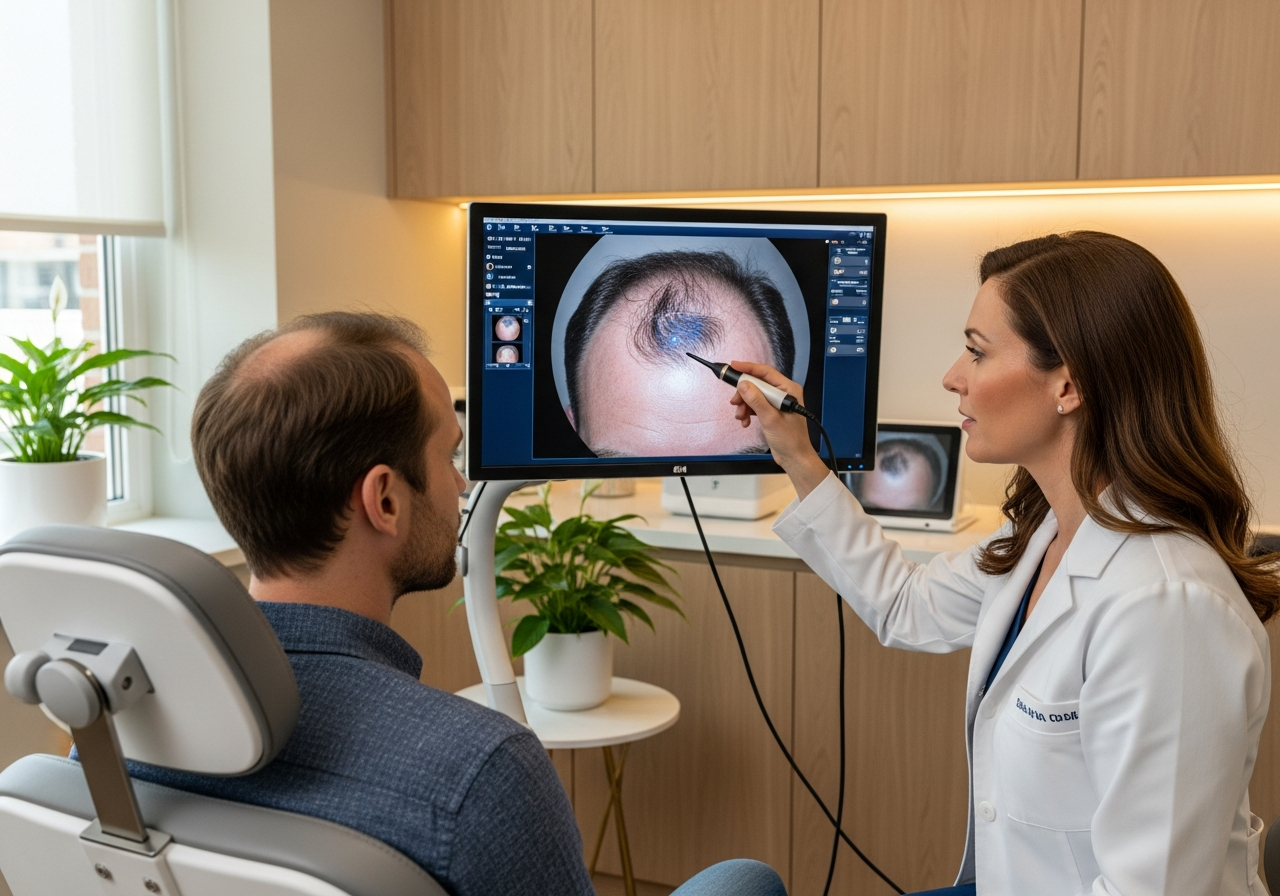
Common patterns
Notice a change? Start by describing it.
These patterns can offer clues, but they cannot confirm a diagnosis on their own. If hair loss is rapid, patchy, painful or accompanied by scalp inflammation, arrange a clinical assessment rather than relying on a home treatment.
Hair seems to come out more than usual across the scalp, sometimes after illness, stress or another trigger.
A widening part or receding hairline may fit a pattern of hereditary hair loss, though assessment is still important.
One or more bare patches can have several causes and should be assessed before choosing a treatment.
Flaking, itch, soreness or redness may point to a scalp concern that needs attention.
Shedding can sometimes follow fever, surgery, childbirth or a period of physical stress.
Fragile strands and breakage are not always the same as loss from the follicle; hair-care habits may matter.
01 / Patterns and causes
Different patterns need different plans.
The names below describe common hair-loss patterns. Treatment depends on an assessment of the likely cause, scalp findings and medical history.

Alopecia areata assessment
Round or patchy loss can be associated with alopecia areata or other scalp conditions. An examination helps distinguish possible causes and guide appropriate care.
Discuss patchy hair loss ↗
Androgenetic alopecia
Hereditary pattern hair loss may affect the hairline, crown or central parting. A plan may focus on slowing progression and supporting existing hair where possible.
Discuss pattern hair loss ↗
Telogen effluvium
Increased shedding may follow illness, childbirth, surgery, stress or another trigger. Identifying and addressing the contributing factor is often an important part of care.
Ask about hair shedding ↗02 / Hair and scalp therapies
Options that may be discussed after assessment.
These are not interchangeable treatments, and none is suitable for every person or every cause of hair loss. Ask about evidence, possible side effects, alternatives and likely cost.

PRP for hair
Platelet-rich plasma is prepared from a sample of the patient's blood and applied to the scalp by injection. Its potential role depends on the type of hair loss and individual assessment.
Ask about PRP ↗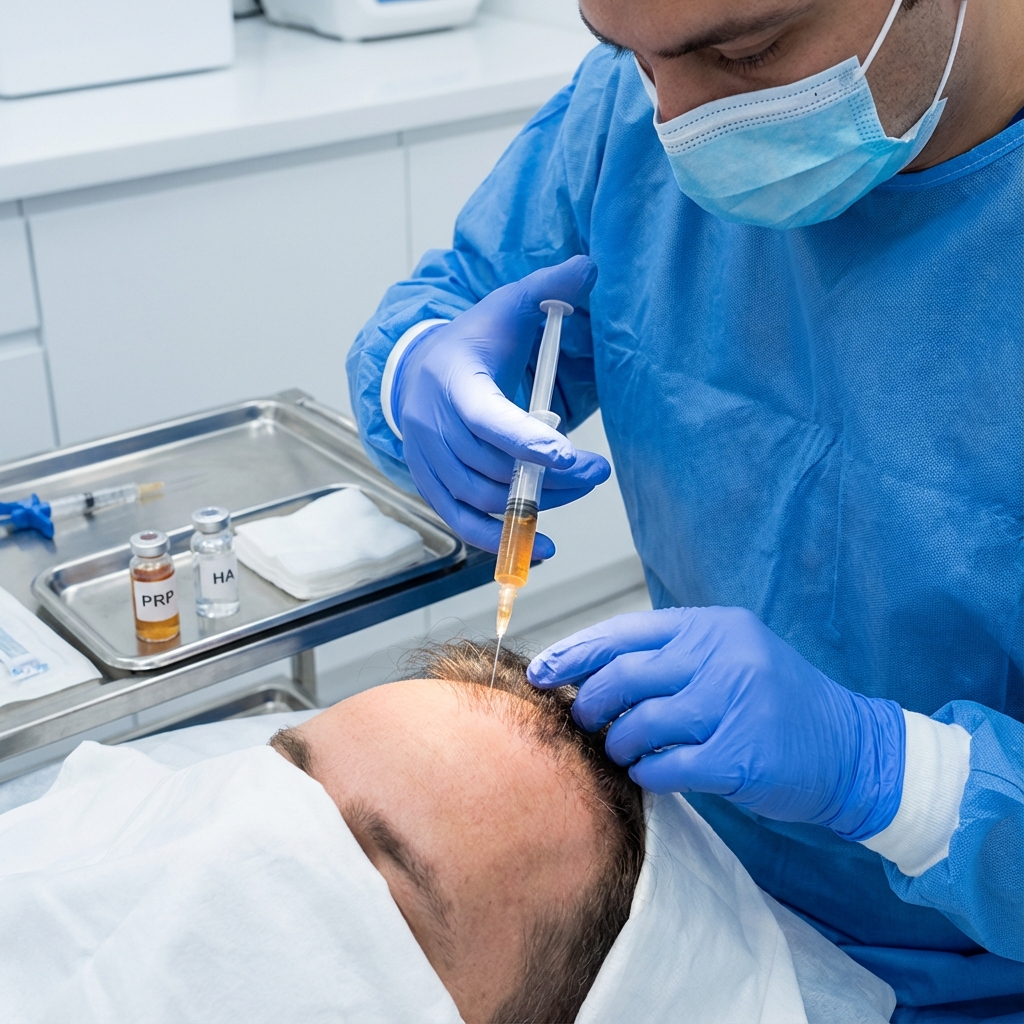
GFC hair therapy
Growth factor concentrate is a blood-derived preparation sometimes considered for selected hair-loss concerns. Ask the clinic how it differs from PRP, what evidence applies and what risks to consider.
Ask about GFC ↗
Hair mesotherapy
Mesotherapy involves placing selected substances into the scalp. Ingredients and evidence vary, so the exact formulation, expected benefit, risks and alternatives should be explained before deciding.
Discuss mesotherapy ↗03 / Support and next steps
Build a plan around your diagnosis.
Some options may be supportive, while others call for specialist input. Availability of each procedure should be confirmed with the clinic.

Low-level laser therapy
Low-level light therapy may be discussed as a supportive option for selected pattern hair-loss cases. Suitability, device type, treatment schedule and realistic expectations should be reviewed first.
Explore laser treatment ↗
Follicle-stimulation options
The term can cover different approaches. Ask which method is being proposed, what it is intended to address, what evidence supports it and how progress would be reviewed.
Ask about options ↗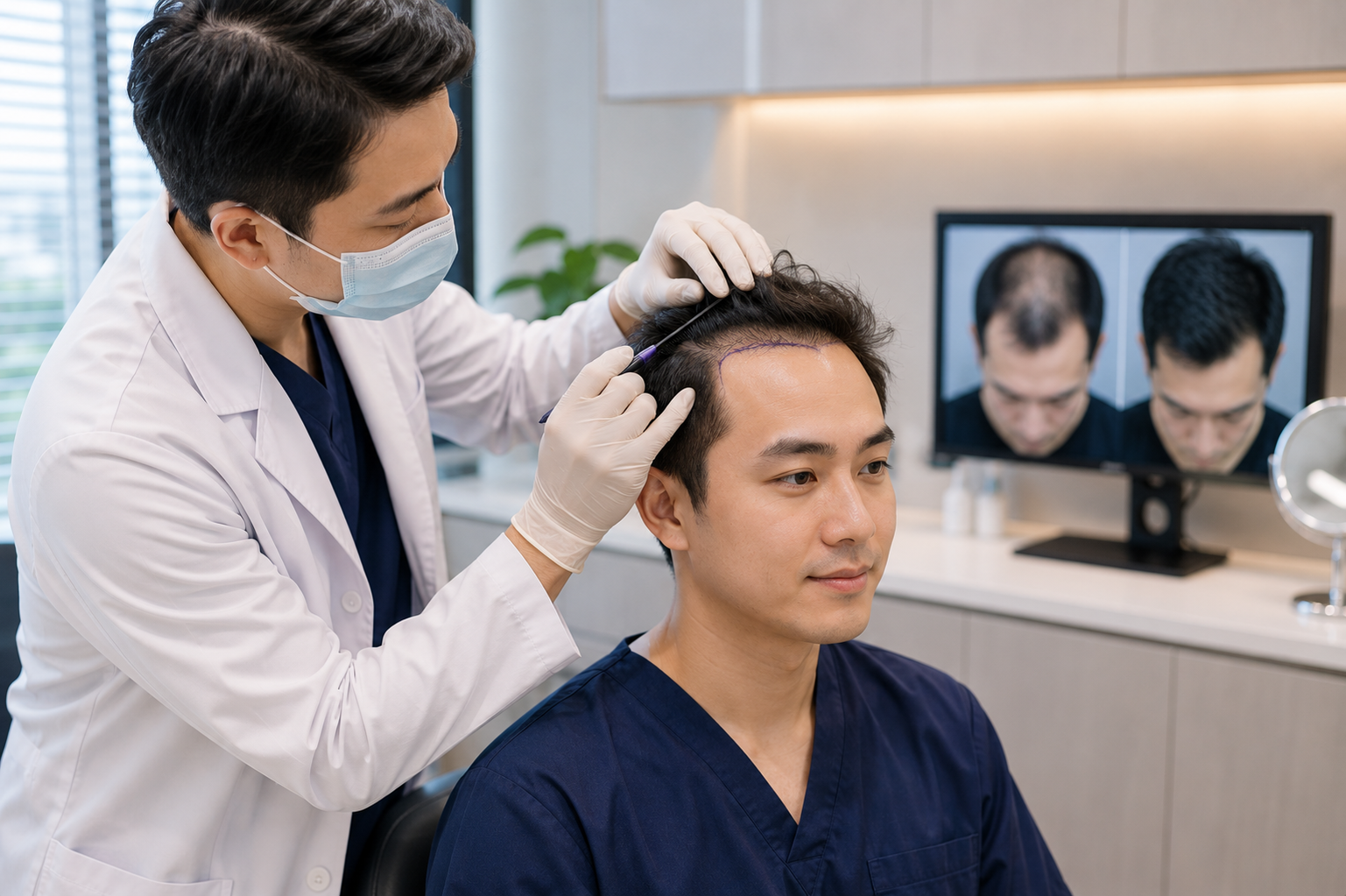
Hair transplant guidance
For some people with advanced hair loss, a transplant consultation may be worth discussing. Candidacy, donor area, likely limits and whether surgery is available through the clinic need separate confirmation.
Discuss next steps ↗Images are illustrative external photographs and do not depict Derma Plant patients, guarantee outcomes or confirm that each procedure is currently available at the clinic. Confirm image usage rights and procedure availability before publication.
Your care journey
Know the steps before starting.
Hair growth is gradual. A useful plan sets out the likely cause, available options, limitations and how progress will be reviewed.
Discuss your history
Share when the change began, how it has progressed, symptoms, medicines, recent illness and previous treatments.
Assess the scalp
The clinician examines the hair and scalp. Tests may be suggested when the history or findings make them useful.
Review options
Discuss potential benefits, risks, alternatives, cost, session requirements and a realistic review timeline.
Review progress
Follow the agreed plan and attend reviews. Adjustments may be needed depending on the response.
A simple guide
Which concern would you like to discuss?
This table is a starting point for a conversation, not a diagnosis or treatment recommendation. The final approach depends on a clinical assessment.
| Concern | What may be discussed |
|---|---|
| Gradual pattern thinning | Assessment for androgenetic alopecia and whether medical or supportive options may be appropriate. |
| Patchy loss | Diagnosis first, including whether alopecia areata or another scalp condition may be involved. |
| Sudden or diffuse shedding | Review of possible triggers such as recent illness, childbirth, medication changes, stress or nutritional concerns. |
| PRP or GFC enquiry | Whether a blood-derived therapy is relevant for the diagnosed concern, with discussion of limitations and risks. |
| Advanced hair loss | Whether further specialist advice or a hair-transplant consultation may be useful. |
Preparation and safety
Small details can make a difference to your care.
Preparation depends on the procedure being considered. Follow the instructions given for your own treatment rather than relying on a generic online checklist.
Before a consultation or procedure
- Share all medicines, supplements, allergies and relevant health conditions.
- Describe recent illness, stress, childbirth, diet changes or a new hair-care routine if relevant.
- Ask whether any tests are needed and why they are being suggested.
- For PRP, GFC or mesotherapy, ask about expected discomfort, risks, aftercare and alternatives.
After treatment or during follow-up
- Follow the specific scalp-care instructions provided by the clinician.
- Do not start or stop prescription medicines without medical advice.
- Ask when to review progress and what changes should prompt a call to the clinic.
- Seek prompt medical advice for severe pain, swelling, spreading redness or other unexpected symptoms.
General educational information only. It does not diagnose hair loss or replace an individual clinical assessment. PRP, GFC, mesotherapy, low-level laser and transplant options have different evidence, risks and suitability. Ask the clinic to confirm the exact service, practitioner scope, current availability and charges.
Frequently asked questions
Before you book hair treatment.
These answers offer general information and cannot determine which treatment is right for you.
Does hair fall always mean I am going bald?
No. Shedding can be temporary or related to a number of causes. The pattern, duration, scalp findings and medical history help guide assessment.
Will I need blood tests?
Not everyone needs tests. A clinician may recommend selected investigations if your history or examination suggests a possible nutritional, thyroid, hormonal or other contributing factor.
Are PRP and GFC the same?
No. They are related blood-derived approaches, but preparation methods differ. Ask what is being offered, what evidence applies to your diagnosis, and what risks and alternatives should be considered.
How long will it take to see a change?
Hair growth is slow and the timeline depends on the cause and treatment. It can take several months to assess a response, and improvement is not guaranteed.
Can hair grow back in every bald area?
Not always. The likelihood of regrowth depends on the diagnosis and whether follicles remain capable of producing hair. Some forms of scarring hair loss can cause permanent loss.
Is low-level laser therapy suitable for everyone?
No. It is considered only for selected situations and should not replace assessment of the cause. Ask about expected benefits, evidence, device type and ongoing commitment.
Does Derma Plant perform hair transplants?
The existing hair-treatment information describes transplant guidance. Please contact the clinic to confirm whether surgery is provided on site or whether referral to a separate specialist is discussed.
How much does hair treatment cost in Kanpur?
Cost depends on the concern, assessment, selected treatment and number of sessions. Contact the clinic for current prices and confirm what is included before deciding.
Explore Derma Plant
Related care and clinic information.
If you are unsure where to begin, use the main treatment hub or contact the clinic to ask about current service availability.
Book your consultation
Start with a clear conversation about your hair.
You do not need to choose a procedure before getting in touch. Share your main concern and ask the clinic about an assessment and currently available options.